

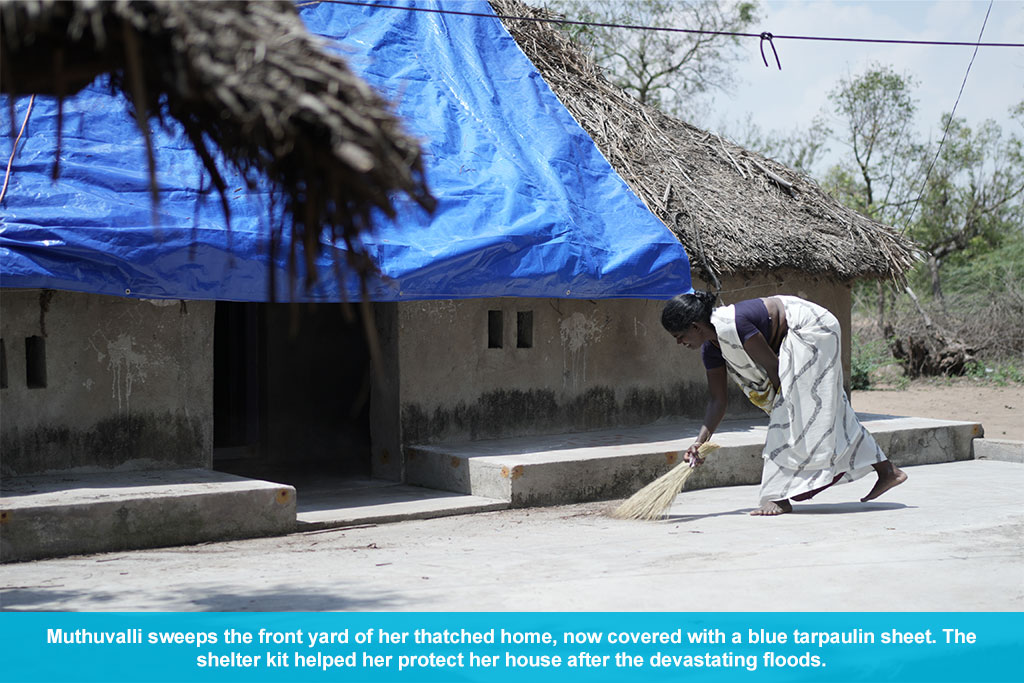
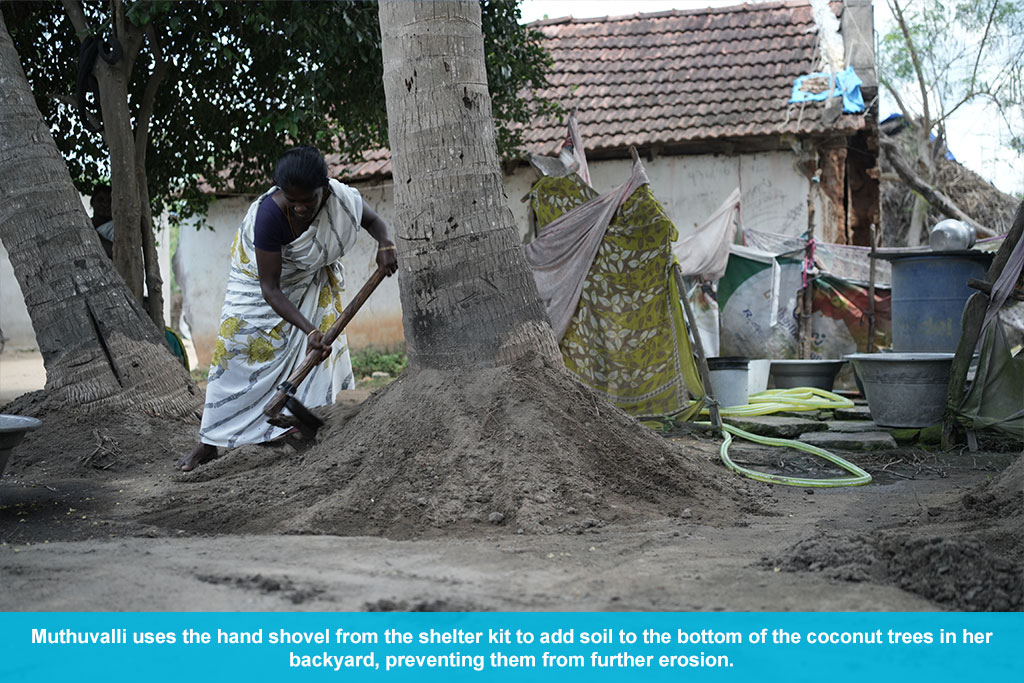
Muthuvalli (37), lives with her two children — Gokuldas (14) and Swathi (15) — in Iruvelpattu village, Villupuram district. After losing her husband Gunasekaran in early 2024 due to an illness, she became the sole provider for her family. Working in agricultural fields and sand mines, she earned a modest income that helped cover their basic needs. But life took a difficult turn when Cyclone Fengal triggered severe floods across Tamil Nadu’s coastal belt in December 2024.
“As the water levels started rising in the house, my immediate concern was to protect our , which I managed to do. But our clothes and belongings were soaked, and the floodwaters kept rising,” says Muthuvalli. She and her children took shelter at a neighbour’s home for safety. “We had no electricity, little food and everyone fell sick. I could not go to work. We just had to wait for the water to recede,” she recalls.
When the floodwaters finally subsided, the extent of damage was clear. Essential supplies provided by the government in the form of rice, groceries and financial aid — brought some much-needed relief to Muthuvalli. But rebuilding their damaged home remained a significant challenge.
Through Habitat for Humanity India’s Housing Disaster Resilience and Response (HDRR) programme, Emergency Shelter Kits (ESKs) were provided to 1,206 families like Muthuvalli’s who were impacted by Cyclone Fengal. The kits were distributed to the families belonging to the Irular (commonly known as Irula) tribe and other marginalised communities residing in Koliyanur, Vikravandi, Thiruvennai Nallur, Kandamangalam and Kanai blocks of Villupuram district. Designed to offer immediate relief, the ESKs help families build temporary shelters or carry out basic repairs to their damaged homes, creating safe spaces until more permanent solutions can be put in place. Each kit consists of tarpaulin sheets, ropes, nails, a claw hammer, tie wire, pliers, a hoe, handle and plastic sheets. Habitat for Humanity India follows a ‘Pathways to Permanence’ approach of responding to disasters in a phased manner - beginning with immediate relief in the form of emergency shelter kits, followed by home repairs or transitional shelters and ultimately supporting families to build disaster-resilient permanent homes.
“The tarpaulin sheets protected our house from the rain, and the tools helped us make small repairs,” Muthuvalli says. The support allowed her to bring some stability back into her children’s.
Though challenges still remain, Muthuvalli is determined to build a safer future for her family. “I want my children to study well and not have to worry about rain flooding our home again,” she shares quietly.
You can help support Muthuvalli’s dream of building a permanent, safe home. With your help, she can rebuild her life with dignity and hope.
Donate now to make a difference.