

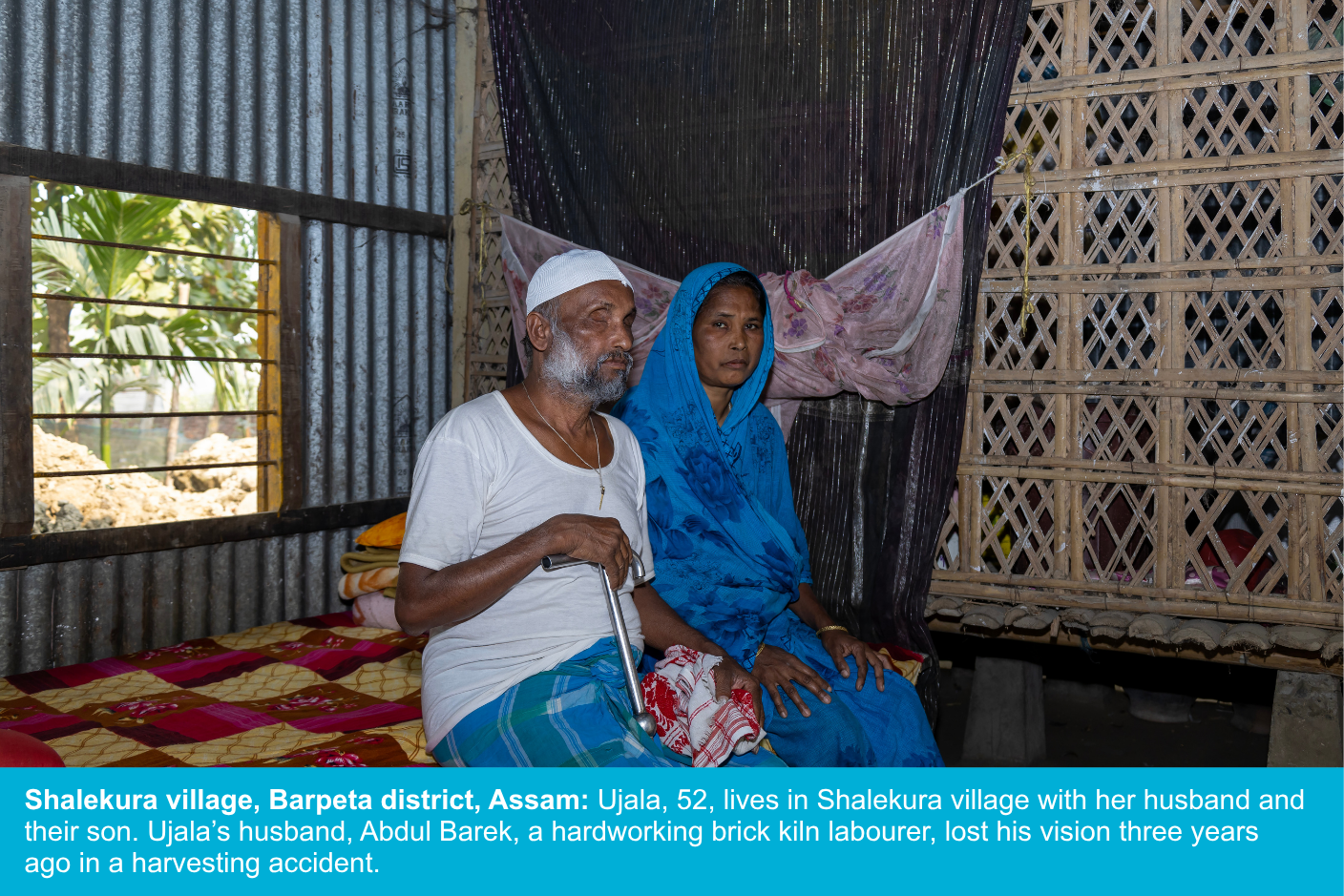
Ujala, 52, lives in Shalekura village with her husband and their son. Her husband, Abdul, worked in brick kilns for over 14 years, but three years ago, he lost his vision in an accident while harvesting. Since then, Ujala has taken on the responsibility of supporting the family as a daily wage labourer, though finding regular work has been difficult. As a result, their son, Fulchan, had to drop out of college and migrate for work.
Back in the day. Ujala and Abdul worked in multiple brick kilns across Assam, often leaving their children behind so they could attend school. During the off-season, Abdul took up daily wage labour in nearby villages. “We worked hard, hoping to build a better future,” Ujala says. “But despite our efforts, life turned out differently.”
The family lives in a flood-prone area where yearly floods disrupt their lives. Roads, rice fields and homes, including theirs, are submerged. When floodwater rises inside their home, they elevate their beds and take shelter on them. “We have no way to communicate or move around. We depend on other people’s country boats (small boats used for local water transport) just to reach the market,” Ujala explains.
The floods cause enormous hardship for Ujala’s family. Floods mean lost wages. Additionally, they are unable to adequately prepare for the floods due to financial constraints. “We don’t have any work during the floods, so we have to sell our poultry just to make ends meet,” Ujala recounts.
In a desperate attempt to improve their situation, the family leased a small plot of land to grow rice. However, last year’s flood ruined their crops thrice, leaving them with nothing to save for the year. Their situation became increasingly perilous with each passing flood, intensifying their grief.
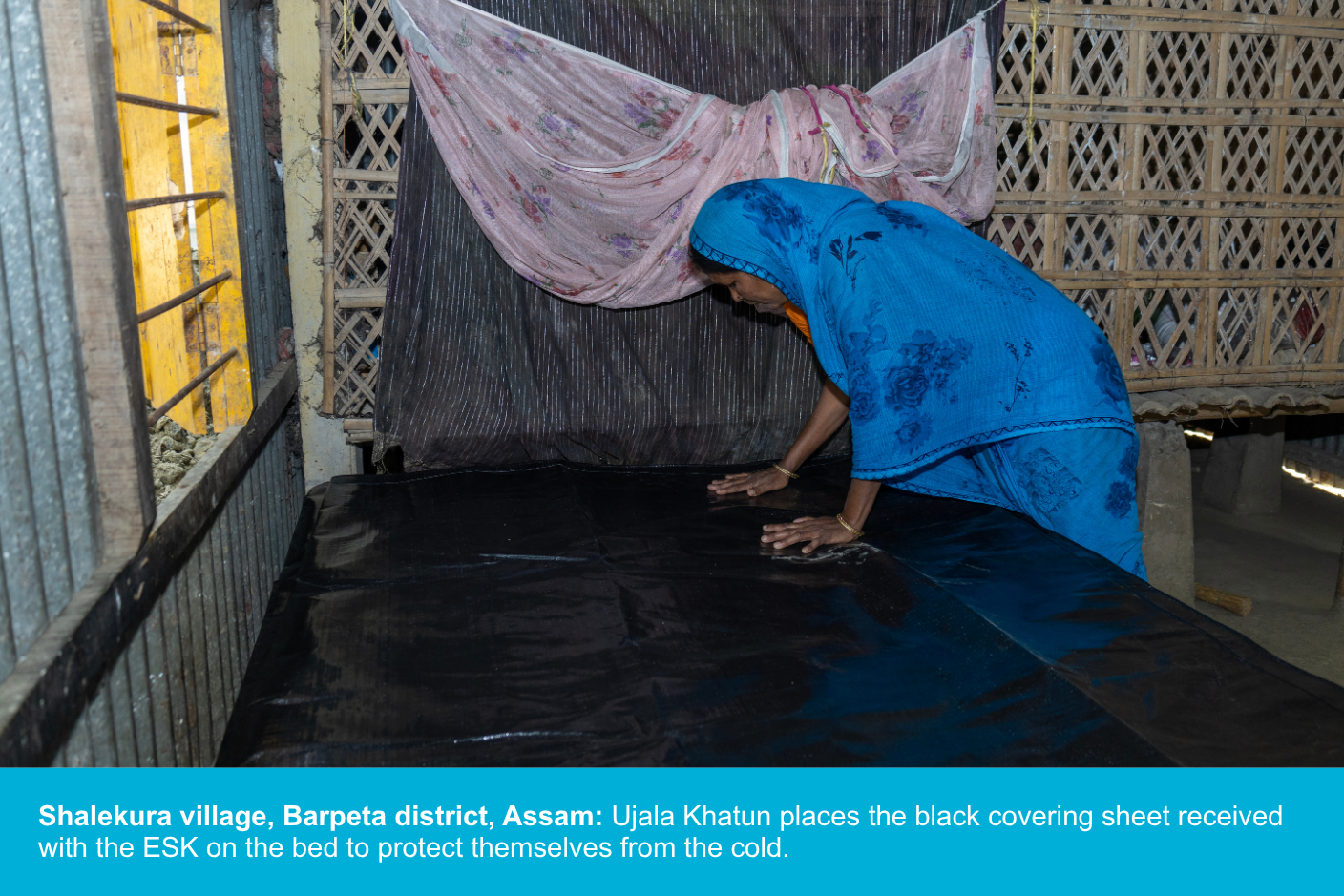
Habitat for Humanity India provided an Emergency Shelter Kit (ESK) to Ujala’s family. With the spade, Ujala has found work in earth-moving jobs, while the tarpaulin protects their bed from cold and dampness in winter.
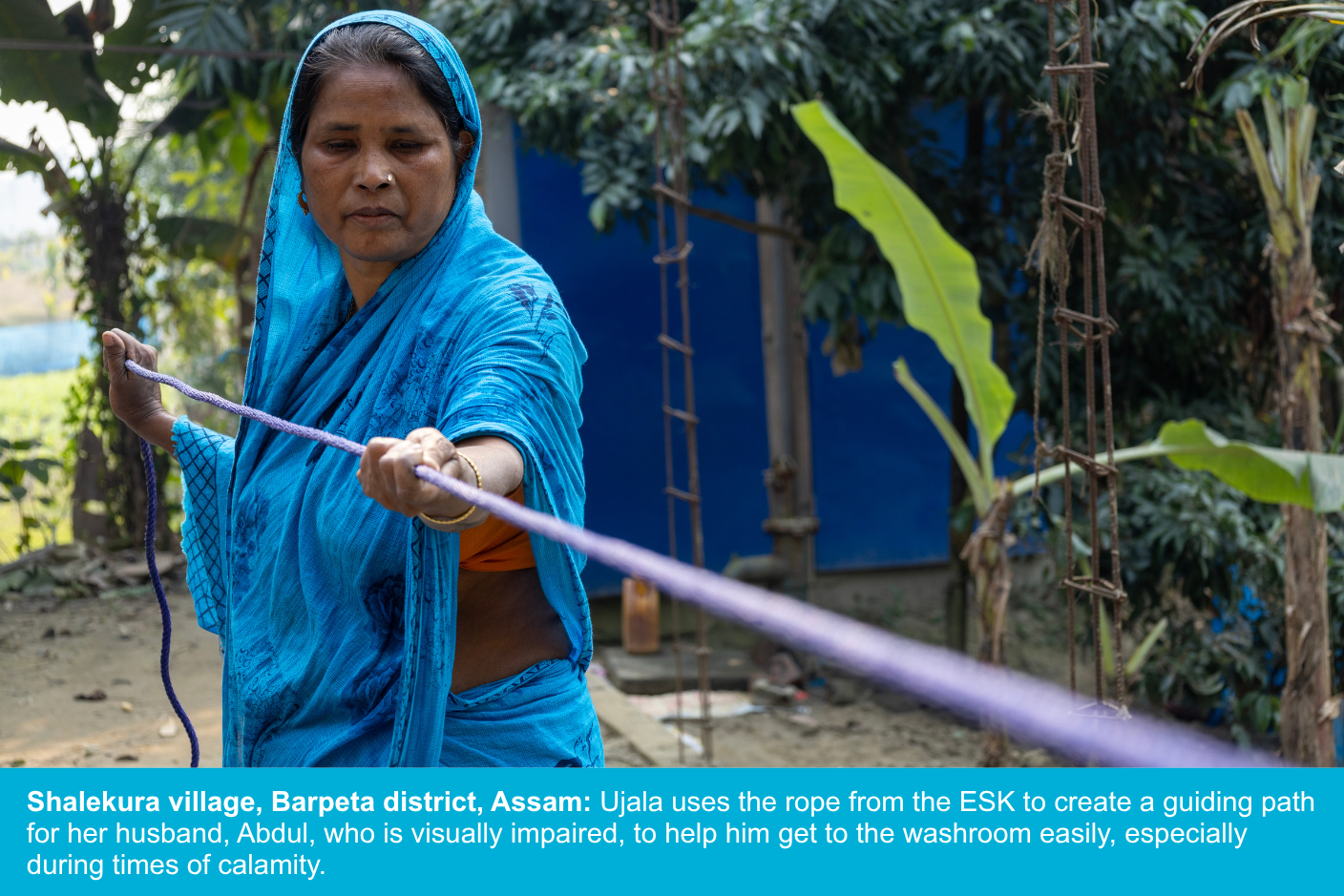
Using the rope, she has also created a guide path for Abdul to reach the toilet safely. “These items have been extremely useful. We could not afford them on our own. Earlier, we had to borrow them from others during emergencies,” says Ujala.
While challenges remain, the support has provided Ujala’s family with comfort, dignity and hope. The tools from the ESK will help them prepare for future hardships, ensuring they are better equipped to face the next crisis. As part of its Disaster Risk Reduction initiative, Habitat for Humanity India, has provided Emergency Shelter Kits to 329 families affected by Cyclone Remal in Dhubri and Barpeta districts of Assam. Each ESK consists of a tarpaulin sheet, covering sheet, hammer, spade, nails and washers, tie wire, rope, handsaw and a plier, helping them rebuild their homes and livelihoods.