

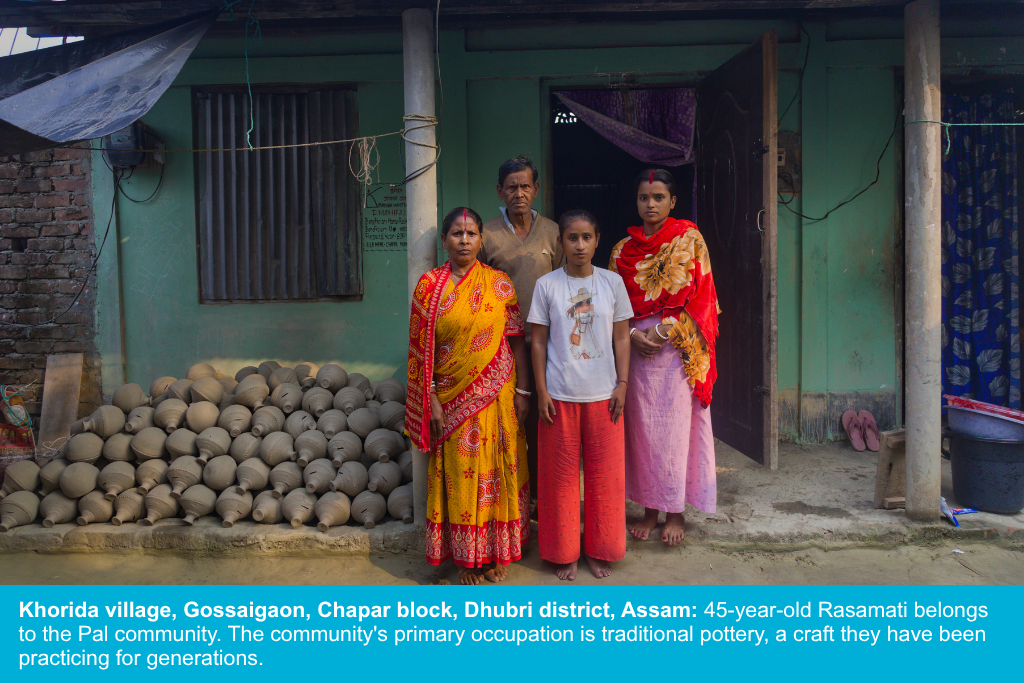
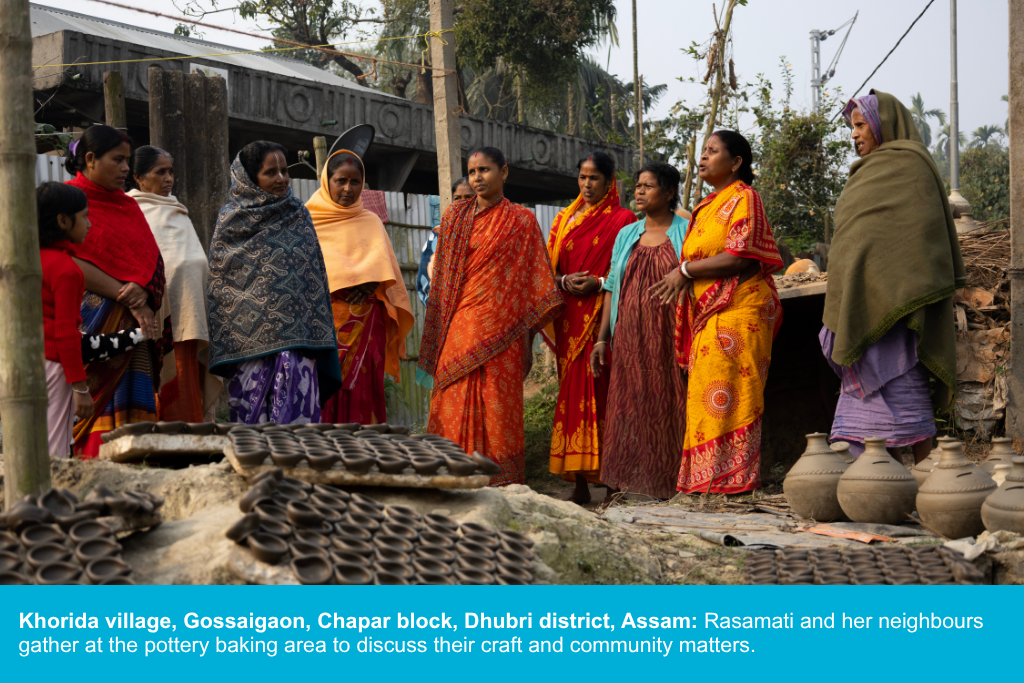
Forty-year-old Rasmati, a potter, lives in Khorida village, in Assam’s Dhubri district with her husband, three children, daughter-in-law and grandchildren. She belongs to the Pal community, which has traditionally earned a living through pottery. However, the Pal community is also one of the most marginalised in the region and pottery is no longer a profitable trade.
With dwindling demands, many families have been forced to take up daily wage labour to survive. Rasmati’s husband, Nikhil, was once a skilled potter but now works as a labourer in the locality. Their two sons assist in Dashakarma shops (a store that sells goods for religious ceremonies) in Bihar, but they are not yet financially stable enough to support the family.
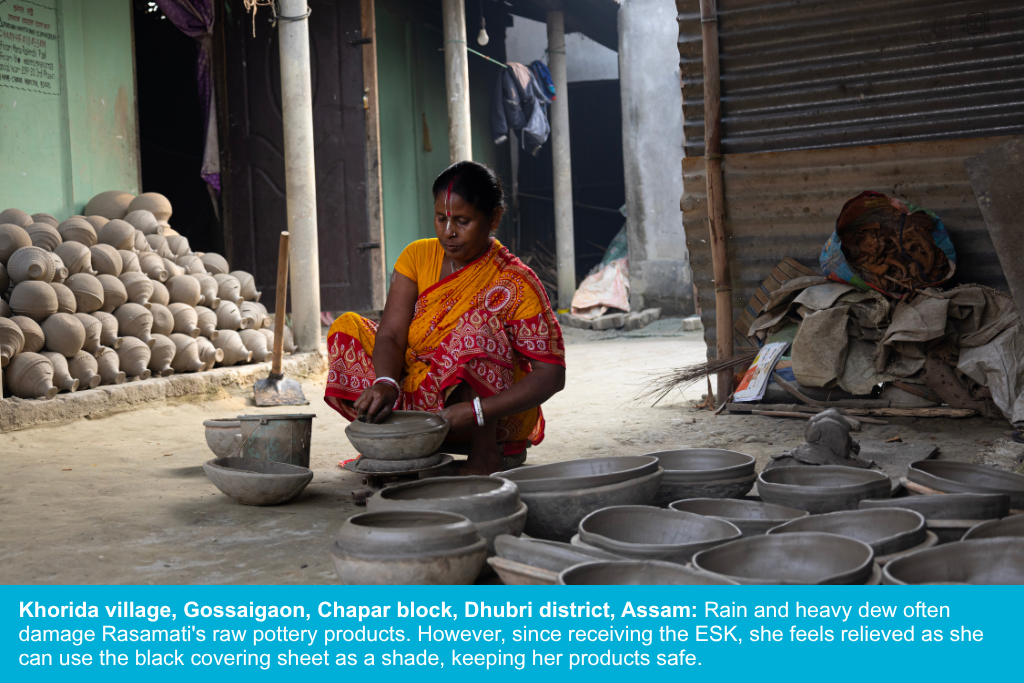
Determined to sustain her family, Rasmati continues pottery — her lifelong skill and passion. “My ancestors made pottery and I learned from them. I want to carry forward this tradition, even if it does not bring in much income. Pottery is a tough craft that involves many challenges. We have to source suitable soil from other places, prepare the clay and shape the pots. Once ready, we must protect them from water before firing them in the kiln,” she explains.
The lack of proper storage for raw pottery has led to significant losses, especially during the monsoon. Frequent floods, exacerbated by an elevated railway line that prevents water from draining out, submerge Rasmati’s home and damage her unfinished pottery.
After Cyclone Remal, Rasmati felt a sense of relief when Habitat for Humanity India provided her with an Emergency Shelter Kit (ESK). The kit contained essential materials such as tarpaulin sheets, a spade, a hammer, nails and rope. These items have made a tangible difference in her daily life.
“The tarpaulin sheets help me protect the raw pottery from rain and dew,” she shares. “The spade is one of the most important tools for my craft — it makes it easier to dig soil and mix clay. I am less worried now. I have even made a makeshift shade to keep my products safe.”
This small yet significant intervention has given Rasmati a better chance of securing her livelihood, even in the face of recurring floods. It has also helped preserve centuries-old craft in the region that is also a part of the community’s heritage.
As part of its Disaster Risk Reduction initiative, Habitat for Humanity India, with the support of Texas Instruments (TI) India, has provided Emergency Shelter Kits to 329 families affected by Cyclone Remal in Dhubri and Barpeta districts of Assam. Each ESK consists of a tarpaulin sheet, covering sheet, hammer, spade, nails and washers, tie wire, rope, handsaw and a plier, helping them rebuild their homes and livelihoods.