

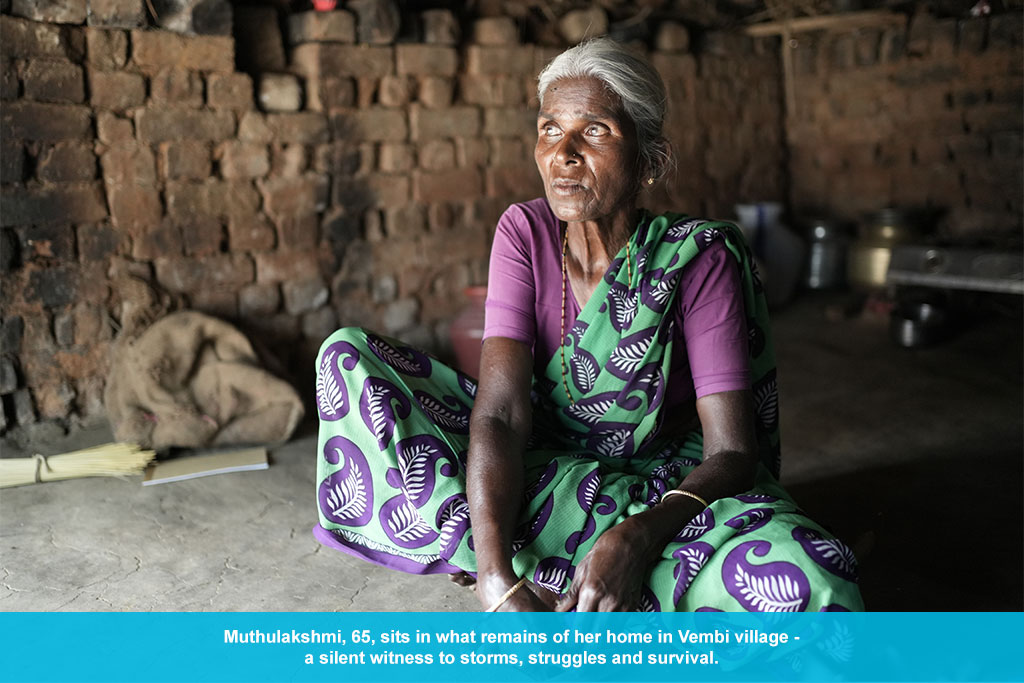
Muthulakshmi (65), a widow residing in Vembi village, Villupuram district, has faced the trials of life with remarkable resilience. She lost her husband 25 years ago and since then, she resides with her third son Lakshmanan, daughter-in-law Ratha and three grandchildren. Muthulakshmi lives with partial blindness, which severely limits her ability to work, leaving her reliant on the old-age pension provided by the state government. “I cannot work because of my blindness,” Muthulakshmi shares.
Lakshmanan works as a daily wage labourer and the income of the family is still insufficient for their needs. “For food and shelter, I solely rely on my third son. His wife does agricultural labour, which helps, but even with all that, we can’t save enough to build a house,” Muthulakshmi shares.
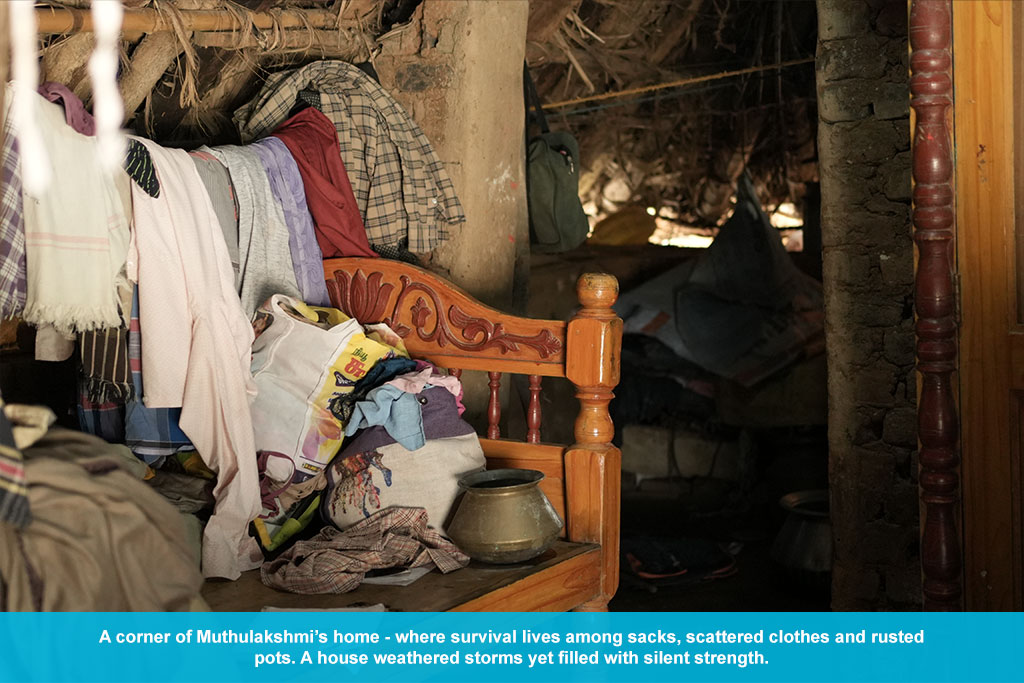
The family’s house had been severely damaged in the recent floods caused by Cyclone Fengal that impacted lives across the coastal belt of Tamil Nadu in December 2024, with dripping roofs and wet floors making it almost uninhabitable. “The water flooded our home, and we had to fill buckets with water and pour them outside. We used mats and bags on the ground to avoid the moisture and stayed in the same house,” she recalls, describing the desperate measures they took to manage the situation.
The rations they received from the government — 5 kg of rice and some basic food — helped them survive, but the lack of a safe place to stay haunted them. “The inside of the house was wet all the time. We kept falling sick without anything to keep us warm,” she shares, highlighting the depth of their struggle.
Through Habitat for Humanity India’s Housing Disaster Resilience and Response (HDRR) programme, Emergency Shelter Kits (ESKs) were provided to 1,206 families like Muthulakshmi’s who were impacted by Cyclone Fengal. The kits were distributed to the families belonging to the Irular (commonly known as Irula) tribe and other marginalised communities residing in Koliyanur, Vikravandi, Thiruvennai Nallur, Kandamangalam and Kanai blocks of Villupuram district. Designed to offer immediate relief, the ESKs help families build temporary shelters or carry out basic repairs to their damaged homes, creating safe spaces until more permanent solutions can be put in place. Each kit consists of tarpaulin sheets, ropes, nails, a claw hammer, tie wire, pliers, a hoe, handle and plastic sheets. Habitat for Humanity India follows a ‘Pathways to Permanence’ approach of responding to disasters in a phased manner - beginning with immediate relief in the form of emergency shelter kits, followed by home repairs or transitional shelters and ultimately supporting families to build disaster-resilient permanent homes.
“The tarpaulin sheets have been helpful. They protect us from the rain and the leakages in the roof. Earlier, we had to place buckets around the house to collect water and prevent the floor from getting wet. But now, we can stay dry,” says Muthulakshmi. The sheets also provide shade during the hot summer months, making their living conditions far more bearable.
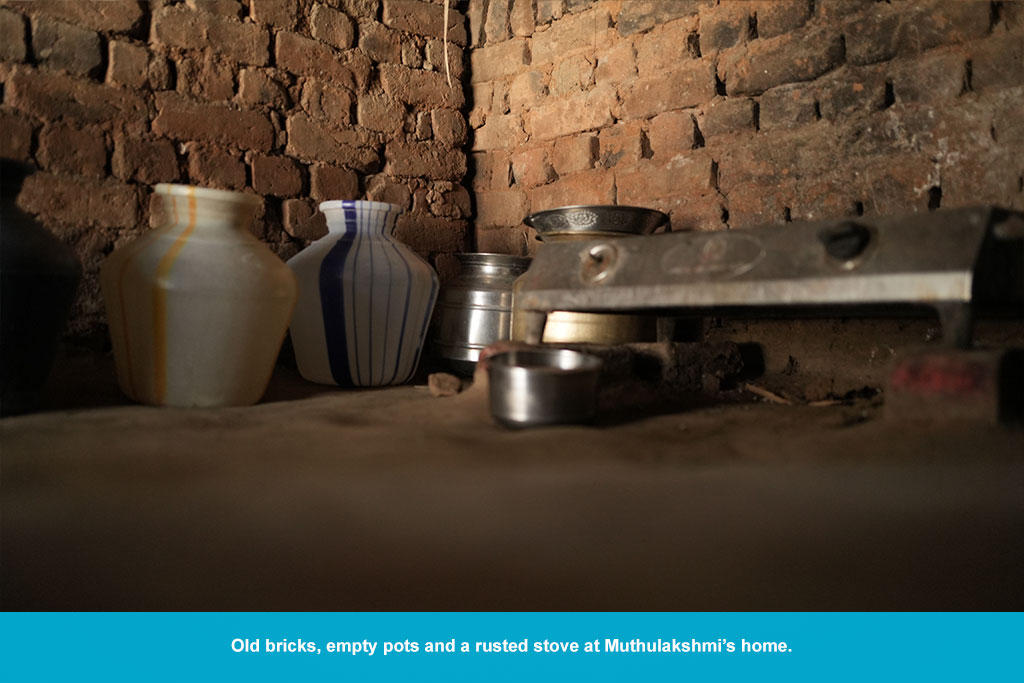
The family's struggles have been compounded by the lack of financial resources to fix their home. “It will cost around ₹15,000 to alter my house, but with our current income, we can’t even afford enough food to fill our stomachs,” Muthulakshmi says.
Despite the ongoing challenges, Muthulakshmi remains thankful for the support she has received. “The kits have been a huge support for us. I thank Habitat for Humanity India for their help. It has made our lives a little easier and we are managing somehow,” she shares. With this support, Muthulakshmi and her family are able to endure the storms they face, both literal and figurative, while they continue to dream of a better, more stable future. Donate to Habitat for Humanity India and help us build a weather resilient home for Muthulakshmi and her family.