“Every year, we would gather Karvi, plaster the hut with cow dung and cover it with a plastic sheet when the rains came. But no matter what we did, storms would tear it apart,” says Khandu.
For nearly half a century, Khandu and his wife, Pokalabai, struggled to maintain their fragile existence in Ubhade village in Igatpuri block, Nashik district, Maharashtra. “We had no place we could truly call home,” recalls Pokalabai. Each rainy season brought new anxieties. Rainwater seeped through the roof and the walls often turned to mush, forcing them to rebuild time and again.
“We could see snakes slipping into our blankets. With no electricity, we had to rely on a small oil lamp to spot them. The cost of the oil felt like burning through our savings, but darkness brought its own fears,” she further adds. Preparing their hut each year required immense effort. Before the rains, they trekked through forests and mountains to collect cow dung for plastering.
“Villagers wouldn’t let us use dung from their cattle. We often had to follow buffalo herds for miles, just to scrape together enough. When that failed, we had to buy a bucket of dung for 50 rupees, a steep price for us,” says Pokalabai.
Khandu, a daily wage labourer earning just 200 rupees per day, struggled to provide for his family. “Whatever we earned was barely enough to survive,” he explains. Meanwhile, Pokalabai had no private space for bathing. “I felt so humiliated when villagers walked by as I bathed. There was no bathroom. Only the mountain for privacy,” she says.
Their children grew up enduring similar hardships. “They had to gather firewood from the forest because no one let us collect even a fallen branch,” remembers Khandu. Fierce storms would often blow away their roof ’s plastic sheets, leaving them exposed to the harsh weather.
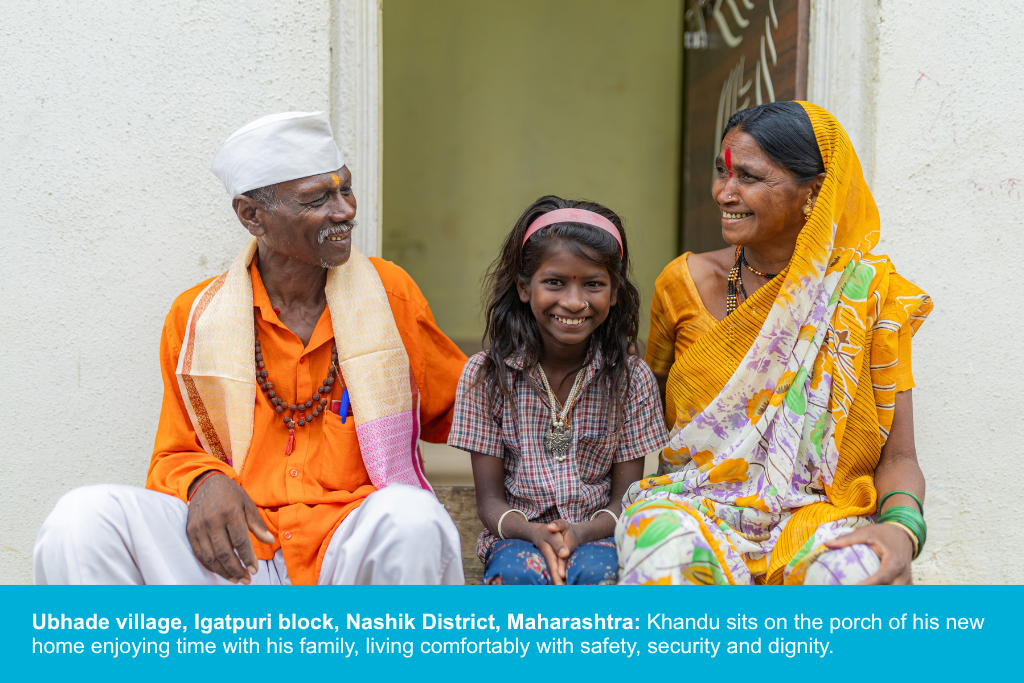
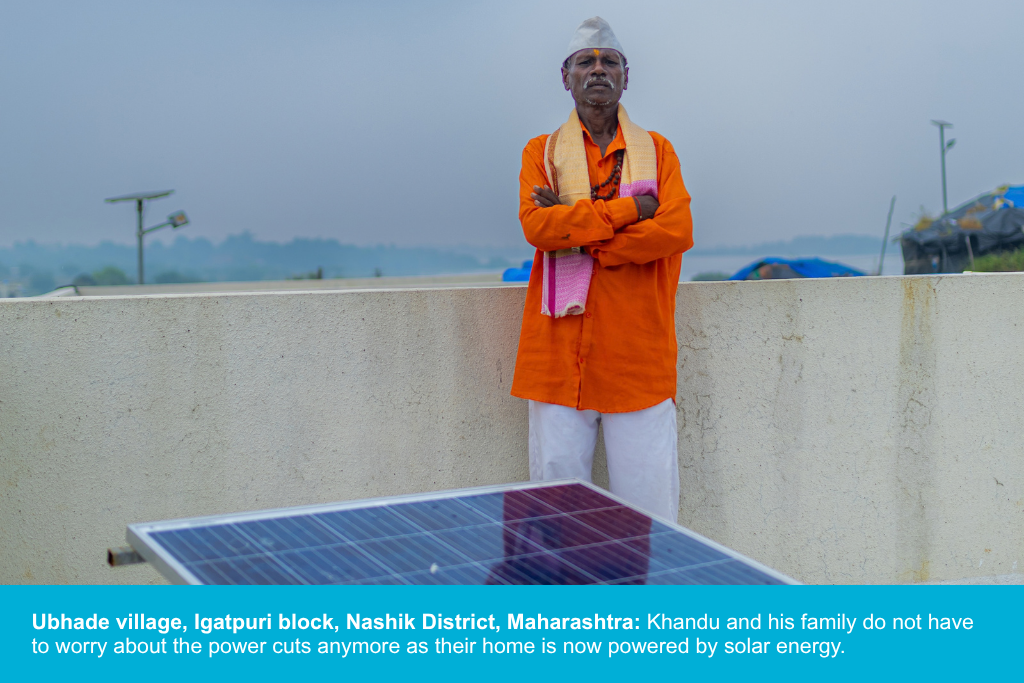
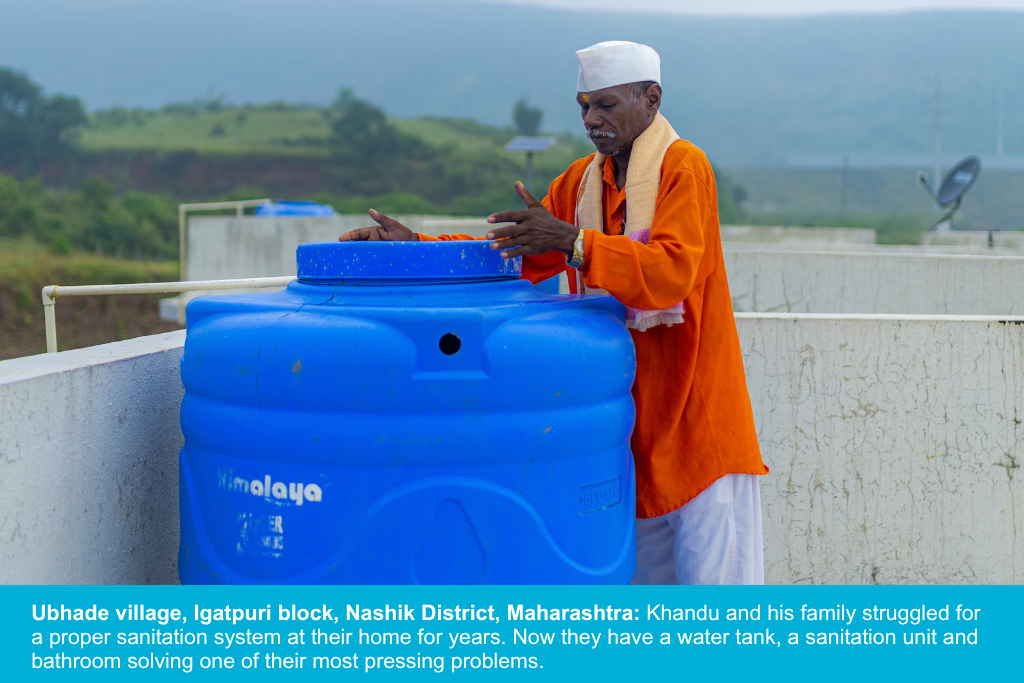
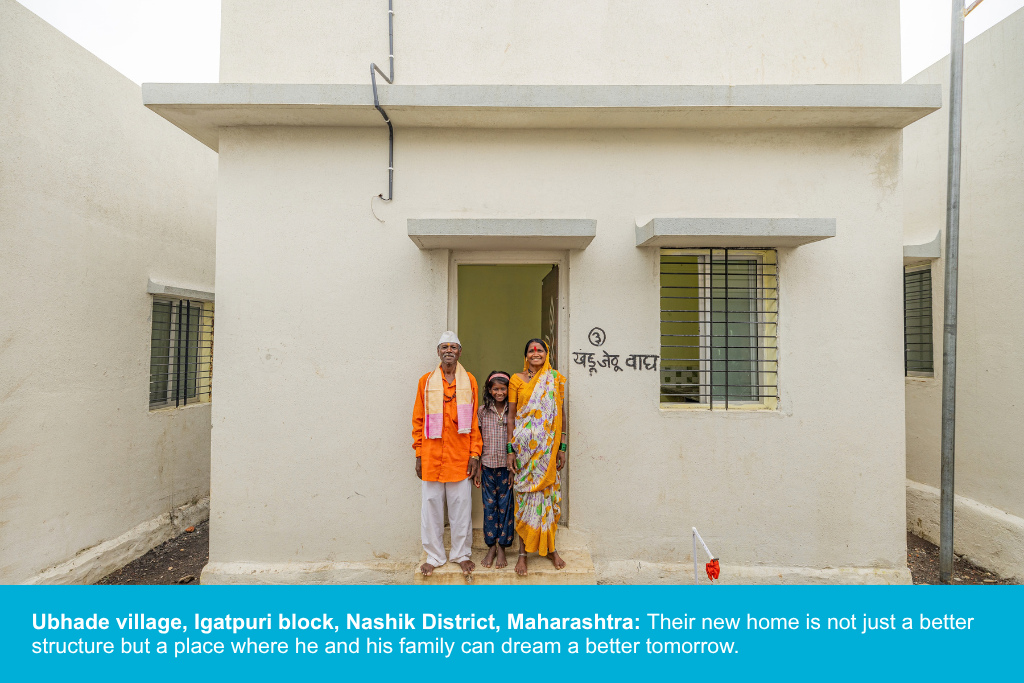
This cycle of struggle ended when Habitat India stepped in. The family now lives in a new home equipped with solar lights, piped water and to Pokalabai’s relief, an in-house bathroom. “This is not just a house. It is a blessing. A true home we never dared dream of,” says Khandu with a broad smile.
The house offers them dignity, safety and security. The family’s health has also improved. “Before, we were always sick. Living in damp, unsanitary conditions gave us fevers and coughs. Now, it feels as though those illnesses disappeared the day we stepped into this house,” says Pokalabai.
The new home, featuring an RCC roof, strategically placed windows for ventilation and solar panels for sustainable energy, has transformed their lives. “I worked alongside Habitat India’s team from the foundation up. I even helped lay the bricks. This house is a legacy for our children, built with our own hands,” says Pokalabai proudly.
The children now sleep safely within sturdy walls, no longer facing the threat of snakes or insects. “This home is not just for us. It is for the generations to come,” says Khandu. “Our children can grow up with safety and dignity here. The struggles of the
past are over.”
Through this project Habitat for Humanity India build homes in partnership with tribal families and sanitation units for 3 schools.