

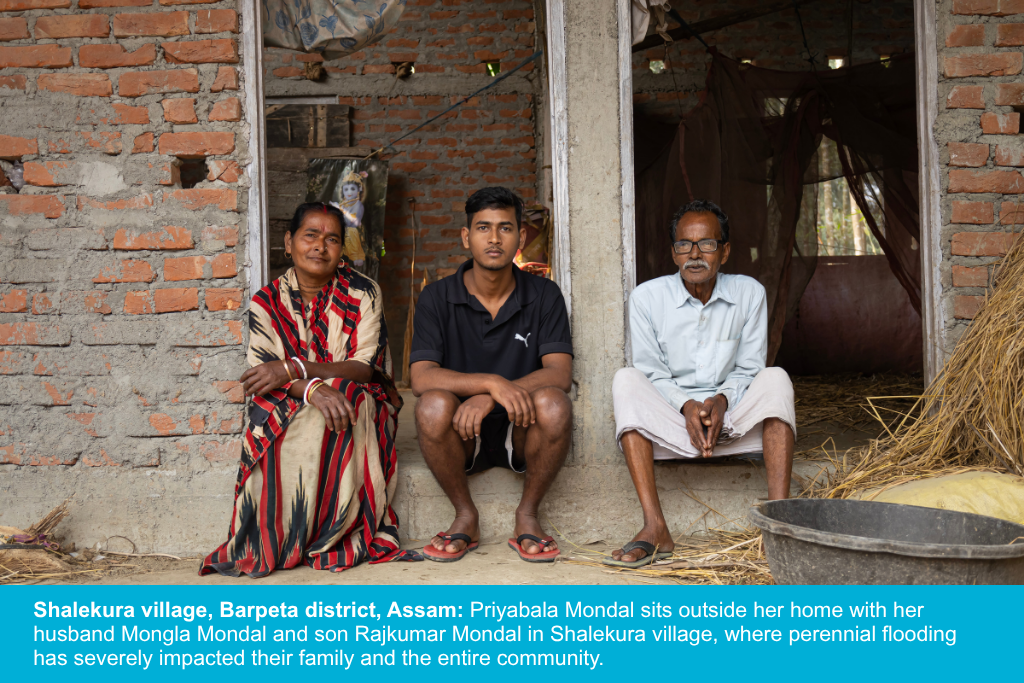
Priyabala, 50, lives in Shalekura village, Barpeta district, with her husband Mongla and their youngest son Rajkumar. Her other five sons also live near their home. Shalekura, located near the River Beki, experiences frequent flooding, making survival a constant challenge for families like hers.
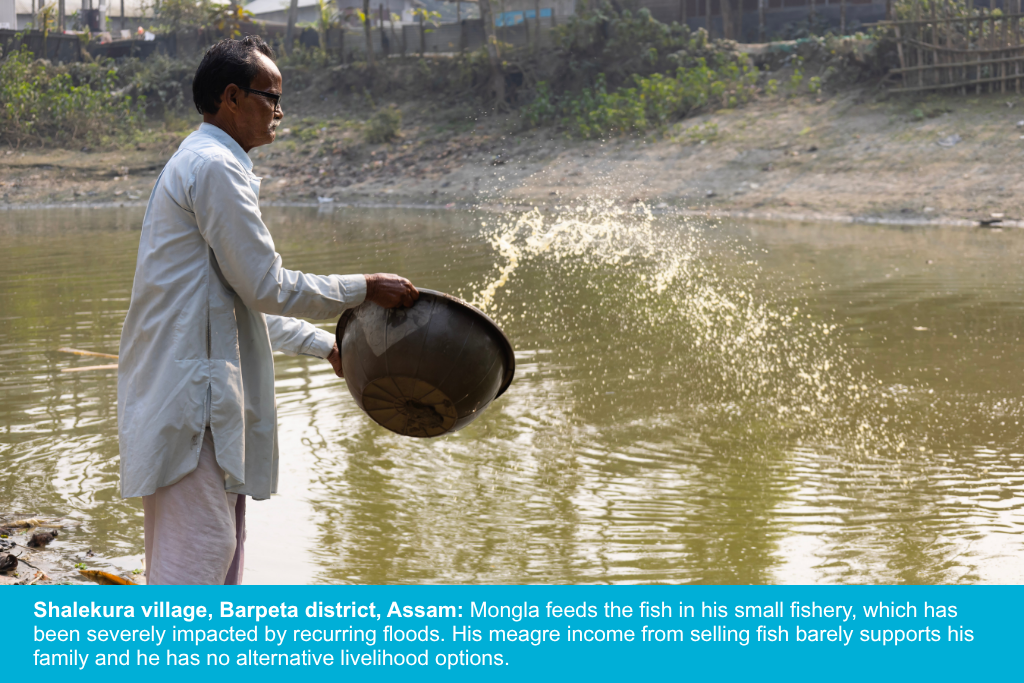
Mongla is a fisherman, selling his catch in the local market. However, his income is unstable, ranging from ₹250 to ₹300 on regular days and even less during floods. Despite their financial struggles, the family is determined to support their son’s education.
Flooding in the region has become more unpredictable. Priyabala describes how, in recent years, the flood cycle has shifted, giving people like her little time to prepare. "We can't predict floods anymore. We don't know when our homes will get inundated," she explained. Floodwaters from the Beki River now submerge their homes within hours, leaving little time to save their livelihoods. "We cannot go to the market to buy necessities. We can't even use the toilet during the flood," Priyabala explains, underscoring the impact of climate change and extreme weather events.
The last flood devastated the family’s fishery, their primary source of income. The water washed away all the fish and eroded one side of the pond’s banks. Even after the flood receded, Priyabala’s elderly husband was unable to work as a daily wage labourer, making their financial situation even more dire. With no savings, they had to borrow money to meet basic needs, pushing them further into debt.
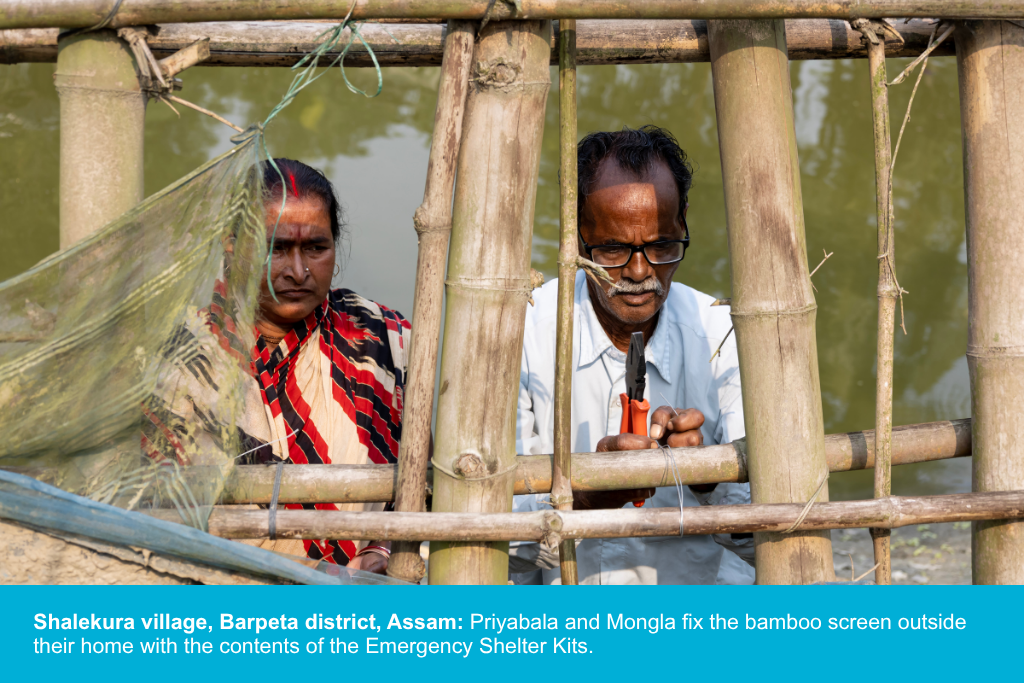
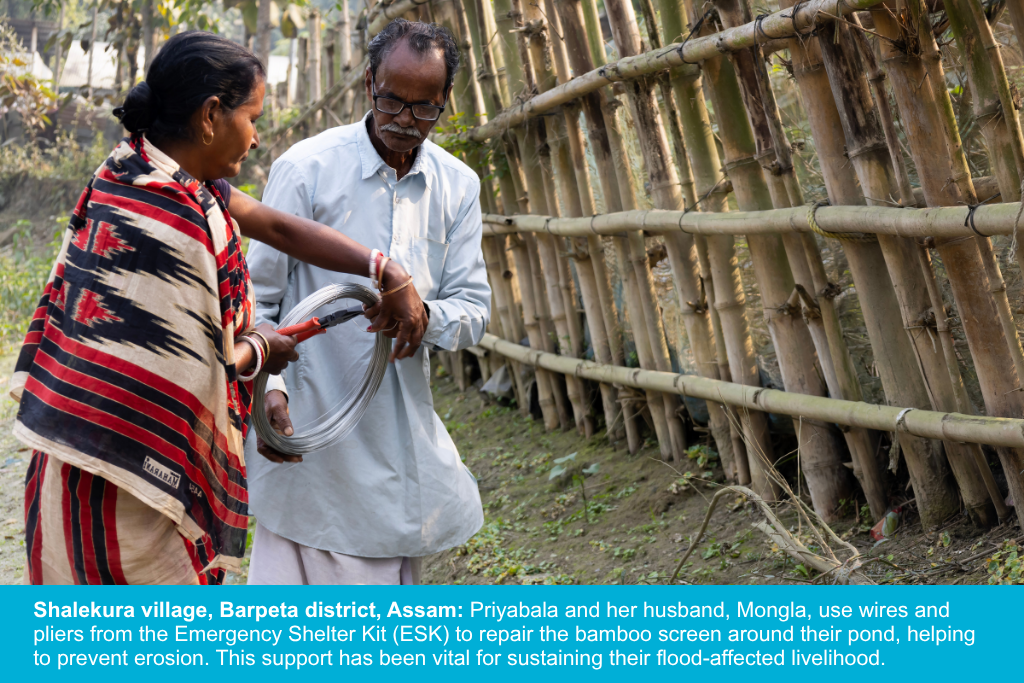
To support families like Priyabala’s, Habitat for Humanity India provided Emergency Shelter Kits (ESK) with essential tools to repair their homes. Priyabala and her husband used the tie wire and pliers to repair the bamboo screen around their pond, preventing further erosion. They also reinforced their home, making it more resistant to rain and dampness.
“The ESK materials have been a great help to us. We do not have the means to buy them on our own,” Priyabala says. “The tarpaulin shelters our cattle and the pliers and wire helped us fix the fishery and our home’s damaged window. One of our sons, Rajkumar who is seventeen-year-old also uses the hand saw for carpentry work.”
While flooding remains a reality, the support has given Priyabala’s family a sense of stability. Their home is better repaired and they are now in a stronger position to face the challenges ahead.
As part of its Disaster Risk Reduction initiative, Habitat for Humanity India, has provided Emergency Shelter Kits to 329 families affected by Cyclone Remal in Dhubri and Barpeta districts of Assam. Each ESK consists of a tarpaulin sheet, covering sheet, hammer, spade, nails and washers, tie wire, rope, handsaw and a plier, helping them rebuild their homes and livelihoods.